Designs for Health
· Creatine monohydrate | powder 3-pack bundle —
· Creatine monohydrate | powder 3-pack bundle —
Couldn't load pickup availability
This three-pack contains three units of the original single product. — Stock is shared with the original product.
The most researched performance and recovery supplement available
The most evidence-backed performance supplement ever studied.
This is a practitioner grade supplement. Depending on availability, it may include Designs for Health. · If that brand is unavailable, your practitioner will recommend the most evidence-backed option for you.
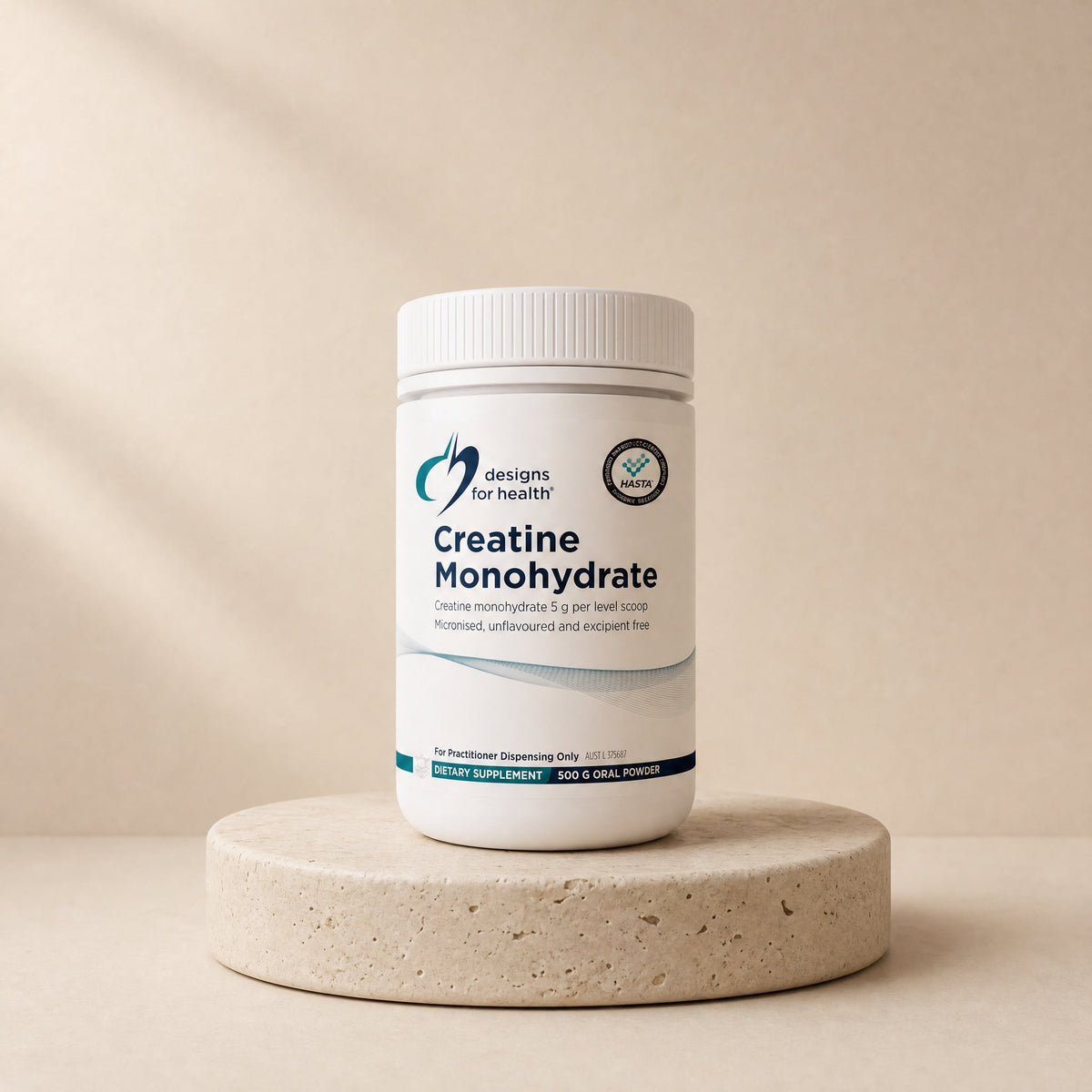
Pure creatine monohydrate powder. | The world's most researched sports supplement for strength, power, recovery and increasingly, cognitive and neurological health. 500g with no fillers or additives.
Nutritional Biochemistry
Creatine (N-aminoiminomethyl-N-methylglycine) is a naturally occurring nitrogen-containing compound synthesised endogenously from the amino acids glycine, arginine and methionine. The first step of biosynthesis occurs in the kidneys, where arginine and glycine are converted to guanidinoacetate via L-arginine:glycine amidinotransferase.
The second step occurs in the liver, where guanidinoacetate is methylated by guanidinoacetate methyltransferase, using S-adenosyl methionine (SAM) as a methyl donor. Once synthesised, creatine is released into circulation and transported to tissues, primarily skeletal muscle (~95 %), with smaller amounts in the brain and kidneys.
▪ Creatine is synthesised at a rate of approximately 1 to 2 g per day. It is then distributed via the circulation to tissues, predominantly skeletal muscle, where it exists in dynamic equilibrium with phosphocreatine.
‣ Within muscle, creatine is found in both its free and phosphorylated forms, such as phosphocreatine (PCr). Approximately half of total intramuscular creatine exists as phosphocreatine, which serves as a readily available high-energy phosphate reservoir.
Such factors influence the complex endogenous pharmacokinetics of vitamin C, with absorption, transport, metabolism and elimination regulated by intestinal absorption, tissue concentrations and renal reabsorption. Depending on the presence of risk factors associated with inadequate endogenous vitamin C concentrations, following oral intake, plasma levels increase until reaching repletion/saturation levels (60-80 μmol/L).
Endogenous synthesis provides around half of the daily creatine requirement,2 with the remainder obtained from dietary sources, primarily red meat and fish, or supplementation. Approximately 1 to 2 % of intramuscular creatine is degraded to creatinine each day and excreted via the urine. The rate of degradation is higher in individuals with greater muscle mass or higher levels of physical activity. Baseline creatine levels may be lower in vegetarians and older adults due to reduced intake or altered metabolism, making supplementation an effective strategy to help maintain creatine levels and support physiological functions
Mechanism of Action
Creatine and phosphocreatine are key components of the creatine kinase, PCr system, which rapidly regenerates adenosine triphosphate (ATP) during periods of increased energy demand. PCr donates a phosphate group to ADP to resynthesise ATP, the primary energy currency of the cell. This reaction, catalysed by creatine kinase (CK), provides an immediate energy buffer that supports muscular contraction and neural activity
Because PCr has a higher phosphate transfer potential than ATP, it allows rapid ATP resynthesis during periods of increased energy demand, such as resistance training or cognitive effort, delaying glycogen utilisation and sustaining cellular energy output.
Cellular uptake of creatin
What's in it
| Ingredient | Form | Dose | Notes |
|---|---|---|---|
| Creatine monohydrate |
Clinical evidence
- Creatine supplementation and exercise performance, meta-analysis Creatine supplementation produces significant gains in strength and high-intensity performance across study populations
Share